
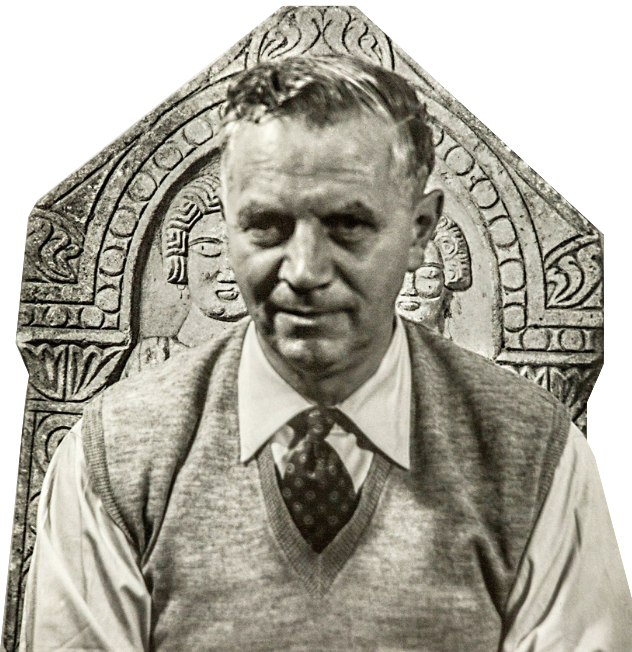
Author’s Note:
Two years ago, I picked up a project from my professor, Ercüment Çelik, at the University of Freiburg while I was about to graduate from my master’s in social sciences. The project seemed simple at first. He was working on some German professors from the University of Freiburg who had to flee during the Nazi era and wanted to dig deeper into their experiences. He assigned me a professor’s name to me and requested a short biography.
Since I had some time on my hands, I jumped right into the research. But the further I went, the more I realized it would be impossible to sum up Breusch’s life in just a short biography. I also noticed that, unlike many other émigré professors, there were not many detailed information available about him. In this case, I was the one putting the pieces together. It took me two years to go through everything, cut it down, and shape it into something satisfying and I finally submitted it towards the end of 2024.
Below is a short version of Friedrich Ludwig Breusch’s biography. I hope to publish a more detailed version as a book.
Author: Kerem Demirbag
Index
I. Foreword
II. Biographical Overview
III. Early Life in Germany
IV. Journey to Turkey
V. History of Chemistry Education in Turkey
VI. Times of Exile and Experiences in Turkey
VII. Thoughts and Activities on the Political Sphere of Turkey and Germany
VIII. Social Interactions and Connections
IX. Departure from Turkey and The Last Years of His Life
X. Academic Works
XI. Author’s Closing Remarks
XII. Bibliography
I. Foreword
The University Reform, carried out under the leadership of Atatürk in 1933, is a turning point in Turkish higher education during the Republican period. Having been invited to Turkey by Mustafa Kemal Atatürk to formulate a plan for a radical reform of Dârülfünûn (Turkish for ‘house of science’), especially in science and medicine, Swiss educator Albert Malche arrived at Istanbul in the beginning of 1932 and published his report containing his criticisms of Dârülfünûn and suggestions about Turkish higher education in June 1932 and presented it to the government. In his report, Malche stated that Dârülfünûn was deprived of a dynamism befitting the Turkish revolution. He emphasized the close bond between the university and society, and therefore, “excessive theorism” in the university should be contested. He also pointed out that in re-established countries similar to Turkey, the university departments’ primary focus must be determined precisely to drive development (Günergün & Kadıoğlu, 2006). Based on Malche’s report led to what is called the university reform, and Dârülfünûn was closed on July 31, 1933, in accordance with the decision taken by the Grand National Assembly of Turkey on May 31, 1933, and one day later, on August 1, 1933, Istanbul University was established. Opened with a ceremony on November 19, 1933, Istanbul University originally was comprised of the Faculties of Medicine, Law, Science and Literature (Günergün & Kadıoğlu, 2006). The faculty members of the new university consisted of three groups. In the first group consisted of faculty members recruited from the closed Dârülfünûn, and in the second group entailed young Turkish faculty members who had completed their undergraduate and doctoral degrees abroad. The third group comprised of foreign scientists who came to Turkey to escape the pressure of the National Socialist administration in Germany in those years.
In his attempt to revolutionize Turkey’s higher education system, Atatürk utilized Hitler’s Civil Services Restoration Act April 7, 1933, as an opportunity to attract academics deprived of their government positions (McBride & Bertman, 2017). From 1933, Istanbul became an apparent safe haven for academics fleeing form the national socialist’s fury. Exiled professors contributed significantly to the development of the Turkish higher education system by delivering modern methods of research and teaching, as well as their expertise of academic administration. Pathologist Philipp Schwartz, organic chemist Fritz Arndt, biochemist Felix Haurowitz, philologist Erich Auerbach, and composer Paul Hindemith were among more than 50 distinguished German professors and their German assistants who joined Istanbul University over the next few years. In addition to full-time teaching and research, each professor agreed to learn Turkish as soon as possible to give lectures, translation of specialized texts and manuals, while also agreeing to publishing a textbook in Turkish in their respective field (McBride & Bertman, 2017). Some of those who took sanctuary in Turkey moved on to other countries, primarily the United States and the United Kingdom, beginning in 1937. By 1945, around 1,000 German-speaking exiles had sought refuge in Turkey. Exiles have attempted, and usually succeeded, in obtaining Turkish citizenship. By 1949, around two-thirds of the exiles had returned to their home countries. Another thirty percent went to the United States, while a handful settled in Turkey (Shaw, 2001).
Friedrich Ludwig Breusch was perhaps among the most prominent of these émigré professors. As the last émigré to leave, he has stayed in Turkey from 1937 until 1971 for 34 years, the longest among others (Widmann, 2000: cited in Arslan, 2019).
II. Biographical Overview
Born on October 28, 1903, in Pforzheim, Germany, Friedrich Ludwig Breusch was a German chemist and art collector. In 1928, Breusch received his polymer chemistry doctorate from the Albert Ludwigs University of Freiburg, Germany. From 1930 to 1935 he was department head of the Freiburg Pathological Institute. In 1936, he emigrated first to Switzerland, then to Hungary, and to Turkey in 1937, after being invited by the Istanbul University. He first worked at the Hygiene Institute with Felix Haurowitz until 1940, then at the II. Institute of Chemistry, as the director (Çam, 2012; Reisman, 2006). He remained at this position until his retirement in 1971 (Somel, 2021). During his time in Turkey, not only he provided exceptional developments in chemistry education, but also remained involved in various social, cultural and political endeavors and made great contributions, receiving a Turkish citizenship along the way (Somel, 2021; Üzel, 2014). Breusch was the last remaining German emigrant professor from the 1930s, when he retired at age 68 due to the age limit and increasing street terror in Turkey. In 1971, he left Turkey, after serving for 34 years, and moved to Basel, Switzerland where he focused on his antiquities collection he gathered in Istanbul and publishing two philosophical books (Widmann, 2000: cited in Arslan, 2019; McBride & Bertman, 2017; Dölen, 2009a).
III. Early Life in Germany
Breusch was born and raised in Pforzheim, a town located in the southwestern German state of Baden-Württemberg and in the district of Karlsruhe. He was born in 1903 to a Roman Catholic mother Luise Stehle (1876-1938) and a protestant father, Friedrich Robert Breusch (1873-1942). Friedrich, the father, had descended from Hugenots who fled from the Bruche valley in Alsace after Louis XIV revoked the Edict of Nantes, that granted Hugenots substantial rights (Röder & Strauss, 2016; McBride & Bertman, 2017). The Breusch family moved to Freiburg where his father became a professor at the distinguished science-oriented gymnasium Rotteck Oberrealschule (German for ‘upper secondary school’, a historical form of secondary school in German speaking countries) (McBride & Bertman, 2017).
In 1926 and 1927, his father published two 100-page monographs on teaching of secondary school mathematics and chemistry. Witkop (1995) states “Friedrich, the father, taught chemistry in the same rigidly logical fashion as mathematics. He was not only an unusual teacher but also a man of courage and principles. When the fascist salute became mandatory in schools at the beginning of a lesson in 1933, he would refer to it as “Aufhebung der Rechte”, a pun meaning elevation of your right arm but also repeal of rights.” At age 62, in 1934, four years before his retirement to become compulsory, he prematurely resigned “so as not always to have to say ‘Heil Hitler’.” in protest of fascism. This adamant and brave undertaking made a deep and lasting impact on many of his students but also would prove to be disastrous in the next years for his sons, Friedrich and Robert, who were “cut from the same principled cloth” (Witkop, 1995).
Following his abitur in 1921 at the gymnasium his father works, and where he excelled in the subjects of natural history, geology, and drawing, Breusch worked outside academics for half a year (Dozio, 2021: McBride & Bertman, 2017). Afterwards, he spent the next 5 years studying various disciplines; architecture in Munich; economics, followed by physics in Freiburg; and finally, chemistry in Freiburg and Giessen. According to Dozio (2021) he studied architecture, art history and geology in Vienna sometime within those 5 years (Dozio, 2021: McBride & Bertman, 2017). He then decided to do a doctorate in chemistry at the Albert Ludwigs University of Freiburg under Professor Hermann Staudinger, who later was awarded the Nobel Prize in Chemistry in 1953. In early 1926, Staudinger had not yet arrived in Freiburg, so Breusch next worked with Ernst Späth in Vienna, to provide the experimental basis for his Freiburg doctorate. He was awarded the title of Doctor Philosophiae Naturalis on June 25, 1928, at the Albert Ludwigs University of Freiburg and having completed doctoral and postdoctoral work in natural products and polymer chemistry, Breusch shifted toward medicine and physiology (Dozio, 2021).
During these years, Freiburg was a epicenter of pioneering biochemistry, especially in the Medical Clinic of Siegfried Thannhauser, an expert on metabolic diseases, where his assistant Hans Krebs was applying techniques that he had learned from Otto Warburg to study urea biosynthesis; in the Physical Chemistry Institute of George de Hevesy, who was pursuing medical and biochemical applications for his work with isotopic tracers; and in the Pathology Institute of Ludwig Aschoff. After working as an assistant to Prof. Julius von Braun at the Chemical Institute of the University of Frankfurt am Main between 1930 and 1931 (İshakoğlu, 1993; Dozio, 2021; McBride & Bertman, 2017), he began biochemical research with Prof. Rudolf Schönheimer, head of chemistry at the Pathology Institute in Freiburg, directed by Prof. Ludwig Aschoff from July 1931 to May 1935 (McBride & Bertman, 2017)
There, Breusch took over the management of the pathological-chemical department in 1933 as the successor to Schönheimer, who had emigrated to America. When Hitler came to power and Schönheimer, a Jew, had left Freiburg for Columbia University, as Krebs had left Freiburg for Cambridge the same spring. The next year, de Hevesy left for Copenhagen and Thannhauser left to establish a center at the Boston Dispensary. Thannhauser offered Breusch a position in Boston, but Breusch declined, because of Aschoff’s advice that “the Hitler-spit won’t last two years.” Breusch later refers to his own decision as a “mistake.” (‘Das war ein Irrtum’ [eng. ‘this was a mistake’]) in a 3 April 1979 letter to University of Freiburg’s Dean H. Rimpler. (McBride & Bertman, 2017). At the end of December 1934, Breusch was bitten by a laboratory rat in the Pathology Institute and hospitalized with Weil’s disease and little hope of survival. By mid-January of 1935 he recovered, but in need of a long retrieval. In May, even greater problems followed when he returned to work.
After Hitler’s Civil Services Restoration Act expelled Jews, including two of Breusch’s previous mentors, from their teaching positions, he let his antipathy to the Nazis be known in the Pathology Institute in Freiburg. On April 12, the Ministry rejected Aschoff’s request for a two-year extension of Breusch’s contract, due to an “unfavorable political assessment of Dr. Breusch by the lecturers and young teachers” (McBride & Bertman, 2017). Breusch was seized by the Gestapo in early May 1935 and sentenced to 14 months incarceration in the Columbia Haus, a prison in Berlin and in Sachsenhausen concentration camp, located north of Berlin, consecutively.
In a letter dated May 7, 1935, Karl Berckmüller, head of the Staatspolizeiamt (Karlsruhe Secret State Police, also known as Gestapo), informed Breusch’s father that his son was “arrested and immediately transported to Berlin”. The exact reasons and circumstances of the arrest are not known. Breusch himself reported in a letter to Prof. Horst Rimpler in 1979 about his opposition work and the “absolute refusal to participate in Nazi events”. In addition to political motives, private reasons may also have brought him into conflict with National Socialist ideology. Breusch reports that he was imprisoned for several months in the basement of the Columbia Haus in Berlin (the so-called Columbia concentration camp), where he was “sentenced along with many other leaders of the former German youth movement in Frankfurt” (Dozio, 2021). When his brother appealed to Prof. Aschoff, his own best friend’s father, and a solid advocate of Friedrich, to intervene, he was told, “Why couldn’t your brother hold his tongue if he has different political views from the majority? We were all pleased and proud two months ago when Germany reintroduced general conscription. Only your brother bleated about it.” Robert continued, “I would have been angry if Fritz had not told me some time ago that he had several times been prevented from losing his position through Aschoff’s intervention.” (McBride & Bertman, 2017).
Although Breusch wrote that he was tried together with the leaders of the earlier Frankfurt German Youth Movement, according to McBride & Bertman (2017), it may be related that about half of those imprisoned in Columbia Haus in Berlin were charged with the law against homosexuality, namely Section 175. In 1936, when Freiburg University revoked Breusch’s doctorate, a year after he was imprisoned and perhaps released, the official explanation was “withdrawal due to conviction according to §175, homosexuality)” (Speck, 2014). Most of the 140 degrees revoked by University of Freiburg between 1933 and 1945 were due to Jewish identity. However, of the five revocations related to homosexuality, Breusch’s was the first, taking place two years earlier than the others. His degree would be officially restored after 44 years in 1979. (McBride & Bertman, 2017).
In the meanwhile, Friedrich’s younger brother, mathematician Robert Hermann Breusch (born April 2, 1907, in Freiburg, Germany – died on March 29, 1995, in Amherst, Massachusetts, US), was in another kind of distress with the Nazi regime (McBride & Bertman, 2017). When Robert learned in March 1936 that Friedrich’s doctorate would be revoked due to what was regarded as “unworthiness,” he hid Friedrich’s original diploma to a stash of his own belongings in Switzerland (McBride & Bertman, 2017). Not being able to obtain a university position after completing his dissertation in 1932 on number theory under Jewish professors Issai Schur in Berlin and Alfred Loewy in Freiburg, Robert, took a position following his father’s profession, at a progressive, independent, coeducational secondary school in Birklehof near Freiburg, which had just been founded by the famous Jewish educator Kurt Hahn. During this time in Birklehof, Robert had met and fallen in love with Kate Dreyfuss [(1908 – 1979) Geni.com, 2018)], who was Jewish (McBride & Bertman, 2017). In September 1935, they had to flee in secret, since their marriage would be illegal in Germany. In 1936, to protect his passport from confiscation, he acquired a second by claiming to have lost the original while on a walk in the woods in Freiburg with a mathematics professor Ernst Zermelo, who could be the witness to support Robert’s application for the replacement. He taught himself bookbinding and cleverly hid one of the passports inside a mathematics book, correctly assuming it wouldn’t attract much scrutiny. In the end, the second passport was never needed (Armacost et al., 1995). On April 1st, 1936, Robert left Freiburg by train at 4 in the morning, with skis and a small luggage.
Robert and Kate said their final goodbyes to their parents in the spring of 1936, knowing that they would never see them again. They then left separately for Switzerland and to Paris. After arriving in France, they departed: Robert boarded a ship for Chile, where his chances of finding employment were poor, while Kate traveled to America to stay with her relatives. Since the quotas had already been reached, permanent immigration to the United States was not conceivable at this time. Robert was articulate in Latin and Greek, but no Spanish at all. But he persevered, and in Valparaiso, Chile, he eventually got a job teaching at a university. Following Kate’s arrival from America, they were married in July 1936 (Armacost et al., 1995). Robert’s journey to Valparaiso has been reported on the Chilean newspaper La Nacion’s issue of August 30, 1938, on a very noteworthy level. The article titled “Numerous travelers will arrive on ‘The “Patria’ in the next month” reads:
Distinguished personalities from our country and other nationalities will arrive aboard in this electric ship “Patria” from Hamburg HAPAG, which set sail on the 27th of Hamburg, (…)
The Patria (lat. Fatherland) was the last large passenger ship to be completed for HAPAG [Hamburg-Amerikanische Packetfahrt-Actien-Gesellschaft (eng. Hamburg American Packet Shipping Company)]. It was also first large passenger ship whose electrical system was operated with alternating current. She was built for service through the Panama Canal to the South American west coast. The actual maiden voyage began on the August 27th, 1938, to Chile and led from Hamburg to the west coast of South America. (Gerhard & Schwensen, 2015). According to La Nacion’s article, The Patria’s stops from Hamburg (Ger) were Cherbourg (Fra), Southampton (Eng), Arica (Chl), and finally Valparaiso (Chl). The article continues with a long list of passengers that includes, remarkably, Friedrich’s full name, instead of Robert:
(…) on its inaugural voyage to Chilean shores, including the following:
To Valparaiso from Hamburg
Professor Friedrich Breusch (…)
Unfortunately, whether this was a mistake or an intricate plot in which Friedrich’s name was put to aid Robert’s journey is, and would probably remain, unknown. After Robert and Kate rendezvoused Chile, they got married in 1936, and immigrated to the United States, where they lived together happily until Kate’s death 43 years later. For their first year in the United States, only Kate could find employment, as a house cleaner and secretary in Cambridge, Massachusetts, but ultimately, Robert served Amherst College for thirty years as an outstanding and beloved mathematics professor and accomplished analytical number theorist. He became the William J. Walker professor in 1970 and retired to become an emeritus professor in 1973 (McBride & Bertman, 2017; Armacost et al., 1995). Röder & Strauss (2016), in their lengthy book called “Biographisches Handbuch der deutschsprachigen Emigration nach 1933–1945” (eng. ‘Biographical handbook of German-speaking emigration after 1933–1945’), covering short biographies of German émigré’s, Robert and Kate has been mentioned as “Kinderloss” (German for ‘childless’).
IV. Journey to Turkey
As Robert and Kate were being married in Chile at the end of the summer of 1936, Friedrich was released Sachsenhausen Concentration Camp. After regaining his health in a Swiss sanitarium in Davos, he intended to resume his work as Thannhauser’s assistant at the Boston Dispensary with funding from the Rockefeller Foundation, a position he had turned down previously in 1934 at Aschoff’s recommendation.
Although he received permission for travel to America from German High Command Recruiting, which stated that “he was not to be called up for active military service” and that he had “no objections were raised to his emigration to America”, he was denied entry by the American embassy in Paris for the lack of a passport, despite a personal appeal to the American consul in Stuttgart from the chief medical officer in Boston (Dozio, 2021: McBride & Bertman, 2017). Luckily, Aschoff had praised him as “a chemist who is also experienced in medical areas,” so Albert Szent-Györgyi, fierce adversary of the Nazis, offered him a position at his Medical-Chemistry Institute in Szeged, Hungary where he worked from April 1 to November 12, 1937 (Dozio, 2021: McBride & Bertman, 2017). When Szent-Györgyi was in Stockholm accepting the Nobel Prize for his work on vitamin C in 1937, Breusch had already been expelled from Hungary “because of pressure from the German Gestapo,” despite the vigorous resistance of Szent-Györgyi, and came to Istanbul “by chance”, stated by him in a letter to Otto Meyerhof in 1946 (McBride & Bertman, 2017).
V. History of Chemistry Education in Turkey
Until 1917, chemistry was taught as an auxiliary course for vocations such as engineering, medicine, pharmacology, and agriculture. Throughout this period, chemistry in Turkey lagged the modern chemistry of Europe. During the First World War, Dârülfünûn was reorganized, and in 1915, twenty professors were brought in from Germany. Of these, Fritz Arndt, Gustav Fester, and Kurt Hoesch were chemists. These German chemistry professors established an Institute of General and Industrial Chemistry in 1917, through which chemical education was independently organized, and “Chemist” certificates were awarded. The chemistry education program took three years for students to complete, and laboratory practices were a large part of the curriculum. The laboratories were kept open throughout the day and the students were able to work in them when they weren’t attending the theoretical courses. This system of education continued until the end of the 1960s (Dölen, 2013).
Although the German professors had to leave Turkey after the First World War, chemistry education were continued by the Turkish professors until 1933. Throughout this period, the curriculum did not change fundamentally, although there were some developments. In 1924, an undergraduate program was initiated to educate future high school teachers in physics and chemistry (Dölen, 2013). In 1926, in an effort to improve the level of education, faculty members from France have been invited, which marks as an important turning point in the history of Dârülfünûn (İshakoğlu, 1995). The fact that a cultural agreement had been signed between Turkey and France was effective in inviting professors from France (İshakoğlu, 1993). One of the French professors who were invited to be visiting professors in Turkey, Gabriel Valensi, introduced physical chemistry and electrochemistry into the university curriculum in Turkey for the first time (Dölen, 2013).
Education at Dârülfünûn Faculty of Science continued until the 1933 University Reform with the support of these professors and the contributions of Turkish professors. With the closure of Dârülfünûn and the University Reform in 1933, all but three faculty members of the Faculty of Science were dismissed (İshakoğlu, 1995). Ultimately, after 1933, many serving professors were replaced by academics from Germany who were believed to bring the institutes to a high educational and international standard (McBride & Bertman, 2017). Breusch himself claims that the “previous Islamic professors, who were more concerned with the Koran [sic], than to have taken care of modern factual research” (Mächler & Röwer, 2010). In 1933, one of the numerous German refugee professors that were hired, Fritz Arndt, became the director of the General Chemistry Institute, a position he held until 1955. During this period, chemistry education was heavily influenced by the German tradition. Between 1917 and 1943, the Faculty of Science at Istanbul University was the only place possible in Turkey to receive a chemistry education (Dölen, 2013). From its establishment, Faculty of Science was located in Zeynep Hanım Mansion in Vezneciler district of Istanbul. Alongside with faculties of Literature and Theology, Faculty of Science moved to the mansion in 1908 (Günergün & Kadıoğlu, 2006). Giving importance to the modernization of the existing higher education system, Arndt, Fester, and Hoesch prioritized organizing the Faculty of Science as institutes. Lead by Hoesch, the Institute of Organic Chemistry moved into the old laboratory in the Zeynep Hanım Mansion and continue its academic work there, while Arndt was tasked with finding a new building for his and Fester’s respective institutes (Dölen, 2013).
Having realized that constructing a new building would be difficult under existing conditions, Arndt turned to find a vacant building. He later discovered building for the Training School for the students of the Darülmuallimin (Turkish for ‘School of Male Teachers’), which was still under construction. Arndt’s efforts resulted in assigning the building to the chemistry institutions of his and Fester’s institutions, The Inorganic Chemistry, and Industrial Chemistry, respectively (Günergün, 2008; Dölen, 2013). Taking its name from the Yerebatan Sarnıcı (Turkish for Basilica Cistern), based in the Fatih district of Istanbul –also known as the historical peninsula– the new building was called Yerebatan Darülmesaisi (Turkish for ‘Basilica Institute’) and later the Yerebatan Chemistry Institute (eng. Basilica Chemistry Institute). The Inorganic Chemistry and Industrial Chemistry courses, which were previously given at the Zeynep Hanım Mansion, commenced in this new building in the academic year 1917-1918. The two institutes remained in this building until 1952 (Günergün, 2008; Dölen, 2013).
In the night of February 28, 1942, Zeynep Hanım Mansion was completely burned down as a result of a fire, which was believed to have originated from a due to a forgotten laboratory equipment in the physics workshop (Günergün, 2008). The news reports at the time states that the fire continued for about 6-7 hours until the building collapsed. The fire wiped out most of the building along with its laboratory equipment as well as burning around 25.000 books (Baştuğ, 2017). The education was continued shortly after in the annex buildings’ labs that were not affected from the fire since the students were able to salvage many of their equipment after the fire. Faculty of Science and Literature continued to practice in the new building that was constructed in 1952 on the same ground Zeynep Hanım Mansion stood (Günergün & Kadıoğlu, 2006). The institutes of Inorganic and Industrial Chemistry were relocated from their original locations to this new building in 1952 as well. The period between 1933 and 1946 is characterized as the golden age of the Faculty of Science. A total of 41 PhDs were obtained: 10 in mathematics, 2 in astronomy, 2 in physics, 8 in chemistry, 6 in zoology, 8 in botany, and 5 in geology. In 1967, the Department of Chemistry was separated as the Faculty of Chemistry, from the Faculty of Science. Guest professors, especially Arndt, made significant contributions to the development of chemistry education in Turkey in its early stages by establishing and equipping laboratories as well as bringing the modern faculty system (Günergün, 2008).
VI. Times of Exile and Experiences in Turkey
Breusch arrived in Istanbul late in 1937 and jumped from one division of the preclinical Medical Faculty to another. He spent a few months in the Hygiene Institute, a few more in the Institute for Pathological Anatomy, a few more in the Physiology Institute, and finally, more than a year in the Institute for Biochemistry directed by Haurowitz (McBride & Bertman, 2017). In late 1939, he moved to the Faculty of Science to relieve Fritz Arndt in the Chemical Institute with the responsibility for lecturing to nonmajors, as well as majors, in chemistry, replacing Richard Weiss (Dölen, 2009a: Üzel, 2014). Breusch lectured the nonmajors, mostly medical students, and ran their practical laboratory studies (McBride & Bertman, 2017). Baytop (2011) states that Breusch came to the Faculty of Science from the Medical Faculty in 1940 where he served from 1937 as an assistant of Hans Winterstein (Dölen, 2009a). Pharmaceutics students took physics, chemistry, and biology courses from him after 1940 (Baytop, 2011). In 1940, he became the founding director of the II. Chemical Institute of Istanbul University, with responsibility for educating nonmajors, where he would continue as professor and director until his retirement 31 years later (McBride & Bertman, 2017).
The chemistry courses included between a thousand (Dölen, 2009a) and 1600 (Mächler & Röwer, 2010) non-major students from medical, pharmacy and dentistry departments annually. Although these courses were initially taught by Arndt. Hans Kroepelin, who had left the Technical University of Braunschweig in 1935, was brought in due to the heavy teaching load to teach these courses. Upon Kroepelin’s departure in 1937, Richard Weiss, who had been expelled from the University of Vienna, was brought in 1939. Weiss left in 1940 for a post in Manila. Upon Weiss’ departure, Breusch, who had been working as an assistant to Felix Haurowitz in biochemistry at the Faculty of Medicine at the time, was appointed as a professor. Breusch then established the II. Institute of Chemistry to give chemistry lectures and administer laboratories mostly for non-majors. Breusch created an intensive scientific work environment during the period 1940-1971 during his directorate, and more than a hundred publications. In this period, his chemistry textbooks were circulated, and a significant number of doctoral and associate professorship theses were prepared (Dölen, 2009a).
At the beginning of 1943, he evaluated his first years at the institute:
“My contract expires on June 1, 1943. The II. Institute of Chemistry, which I had taken over 2.5 years ago, was in a bad state. There was not a single laboratory suitable for scientific studies. Moreover, no scientific work had been carried out in the institute in the 7 years since its establishment. Since I took over the management of the institute, I have (with great difficulty) built laboratories suitable for scientific studies in the same institute. 8 scientific studies have been carried out in the institute since the last 2.5 years, although many of the instruments are still missing. Therefore, the institute today has a modern scientific character. The task of the II. Institute of Chemistry is to teach and practice chemistry in the medical, natural, and dental schools of the University, which enroll about 1,000 students. The I. Institute of Chemistry, directed by Prof. Arndt, and the II. Institute of Chemistry, directed by me, have divided their working areas. Since there is no place to work on a doctoral thesis in Yerebatan (I. Institute of Chemistry), the number of doctoral students here is small. Since there are opportunities to work in the newly constructed laboratories, I have given several doctoral theses in my institute. Again, due to lack of space, a laboratory course belonging to the I. Institute of Chemistry is also given in my institute (separate from the chemistry lectures and laboratory of the faculty).
– Breusch’s petition dated March 6, 1943, to the Rectorate of Istanbul University regarding the renewal of his contract (Günergun & Ata, 2010).
In 1942, the Faculty of Science administration’s statement that follows as: “in two years, he created very nice chemistry research rooms” confirms Breusch’s statement. Overall, Breusch supervised 13 PhDs between 1941 and 1971 (Günergun & Ata, 2010). In a letter exchange with Otto Meyerhof in 1946, Breusch appeared enthusiastic to return to the West both by travelling to the United States and by getting a position in Germany. But apparently, it never came to fruition. When invitations came from five different East and West German universities between 1948 and 1956 after the war, he apparently refused them (McBride & Bertman, 2017). Dozio (2021) states that he was “skeptical” about such an appointment in the East German universities, probably also because of his strict rejection of communist ideology, which was unmistakably expressed in his later philosophical writings. In 1950, the medical faculty of the Freie Universität Berlin in West Germany decided to nominate him for the chair in physiological chemistry, but again, Breusch could not make up his mind to accept the call (Dozio, 2021).
During his time in Turkey, Breusch’s books were published in several editions. He published over a hundred articles in German, Turkish and American journals, most of which were on chemistry and biochemistry. In addition to his chemistry lectures, Breusch created a research environment in the field of organic chemistry (Çam, 2012). Üzel (2014), a student of Breusch, describes him as “fatherly.” Koptagel (2010), also a student of Breusch, talks about him in her memoire.
“Our chemistry lecturer was the German Professor Breusch. He gave his lectures in German, translated by his associate professor. He used to write formulas on the glass projectors in the big lecture hall of the Faculty of Science. Since the study hall was usually cold, we would sit shrunken, and because the sound echoed, we would leave the study hall with only the word “ştikştof” [German for Nitrogen (Stickstoff)] remaining in our ears. Fortunately, there were books written by Professor Breusch, and we were able to study and pass the class.”
In 1949, the proposal to invite Werner Heisenberg, Nobel laureate theoretical physicist, and one of the leading pioneers of quantum mechanics, to Istanbul University Faculty of Science, was brought to the agenda at the meeting of the Faculty’s Board of Professors on February 2, 1949. The plan to invite Heisenberg for 1 to 2 weeks and have him give a series of lectures was unanimously accepted. Although it is not clear from the minutes exactly whom the idea of the invitation proposal came from, the fact that Prof. Dr. Kurt Zuber, Director of the Institute of Experimental Physics, stated at the meeting that the invitation would be beneficial suggests that Heisenberg may have been invited at his suggestion. Heisenberg arrived in Istanbul on March 2, 1950 (Ata, 2013). In addition, German chemist Otto Hahn, a forerunner on radioactivity and radiochemistry and the Nobel laurate in Chemistry in 1944 for his discovery of nuclear fission. In 1951, when he was the President of the Max Planck Institute for Atomic Research, Hahn was invited by the Directorate of the II. Chemistry Institute of the Faculty of Science of Istanbul University, namely Breusch, to give a lecture on atomic energy and atomic fission. The lectures continued in series in Istanbul and Ankara” (Ata, 2013; Dellal & Koch, 2019).
In 1965, Breusch wrote an unsigned article about the German Chemists at the University of Istanbul in 1965 for the German Chemical Society’s monthly journal. It offers many sincere insights into the difficulties he encountered in research. The burden of teaching was one of the challenges. He had to manage 1500 to 2000 students every term in both lab and lecture, with the help of only two docents and four assistants. Because the wages were not on par with industry standards, all of the assistants were female. He authored two texts in 1941: one on organic chemistry in Turkish and the other on general and inorganic chemistry. He wrote a dozen revisions of each Turkish text throughout the years, in addition to two 600-page German versions of a thorough chemistry textbooks. In his words, “Thus, there remains little time for scientific work.” Purchasing all but the most basic chemicals with hard currency from the United States or Europe posed an equally formidable hurdle to chemical research in a developing nation, and even after the war, the German government and industry offered no assistance to the chemists who had left the country. The last obstacle Breusch mentioned in his 1965 paper most likely had to do with his planned retirement after six years: “The German government has no old-age pension scheme for German professors abroad – in contrast to the practice of the French and English governments.” He regretted this lost opportunity for Germany to influence the progress of Turkey, at little cost, through the assistance of German professors (McBride & Bertman, 2017). Breusch (1965) states,
“The Turkish government would have been willing to populate its universities with German university teachers for two or three generations. However, it proved impossible to get new German colleagues on long-term contracts to replace the retiring old ones, since the German government does not provide retirement benefits for German foreign university teachers, contrary to the custom of the French and English governments. Thus, the great opportunity to put the entire cultural development of Turkey, with the wish and consent of the government, in German hands for a few funds has been lost due to the cultural indifference of many authoritative German authorities and the Conference of Ministers of Culture.”
Notably, in his Norma Berryhill Distinguished Lecture in 2016 at The University of North Carolina at Chapel Hill, Aziz Sancar, a Nobel laurate Turkish molecular biologist, gives credit to Breusch, as his organic chemistry professor, as one of the influential figures in his Doctor of Medicine education he graduated from in 1969 in Istanbul University Faculty of Medicine along Max Clara and Erich Frank (Sancar, 2016).
VII. Thoughts and Actions on the Political Sphere of Turkey and Germany
Since the possibilities for political action of the scientific German-speaking emigrants in Turkey were limited due to preventative pressures, many exiled professors saw an alternative of a common exchange of opinions in the scientific discussion circles. Instead of action committees, many German-speaking professors and lecturers formed private academies, in which primarily scientific talks and discussions were held. In these scientific private circles, the aim was, on the one hand, to open up scientific dialogue and, on the other hand, to strengthen personal contacts with one another. Breusch (Arslan, 2019; Widmann, 2000; Bozay 2001; Mächler & Röwer, 2010) reported,
“In order to escape intellectual isolation, we had set up a kind of private academy, to which 12-15 students from all disciplines belonged. The leaders were the cultural historian Alexander Rüstow and the lawyer Andreas Schwarz; These included the national economists Neumark, Kessler, Isaac, the archaeologist Bittel, the botanists Heilbronn and Brauner, the zoologist Kosswig, the astronomers Freundlich, Rosenberg, Gleissberg and the chemist Arndt, many only temporarily.” We met in a closed circle every month, which unfortunately no longer exists at any university today; everyone had to present a detailed report on the latest in their subject once a year. Then there was a very intensive discussion. (…) I owe a lot to that.
According to Konuk (2010), a lively intellectual circle, the so-called “Privatakademie”, founded soon after the arrival of émigré’s in Istanbul. The group met regularly, organized interdisciplinary colloquia, and patronized the Karon bookstore. Among the group’s members in the early 1930s were Spitzer, the legal scholar Andreas Schwarz, economists Fritz Neumark, Gerhard Kessler, and Alfred Isaac, archeologist Kurt Bittel, botanists Heilbronn and Brauner, zoologist Kosswig, astronomers Freundlich and Rosenberg, and chemists Arndt and Breusch. Bali (2017) states that, these German-speaking scientific circles were formed precisely among the circles in Istanbul and Ankara. Within these circles, political initiatives arose that wanted to break the silence about developments in Nazi Germany. One of these political initiatives was the German Freedom League (Bozay, 2001).
In 1943 Ernst Reuter, a social democrat who came to Turkey and stayed until the end of the war, turned to Thomas Mann, a fellow emigrant who was in the United States, with a request to formulate an appeal for a “union of all free Germans” (Widmann, 2008; Kubaseck & Seufert, 2016). Reuter’s correspondence with Thomas Mann in 1943 and his efforts to set up a union in Turkey show that Reuter was interested in developing and gathering political forces for the reconstruction of Germany (Dalaman, 2001). Yet, the exchange of letters had no consequences. Unlike Ernst Reuter, Thomas Mann was rather skeptical about the competence of the emigrants and also about the resistance within Germany to design and shape the new Germany (Widmann, 2008; Kubaseck & Seufert, 2016). After the rather one-sided forced exchange of letters between Reuter and Mann proved to be fruitless, Reuter decided, together with Gerhard Kessler, to implement his ideas of a politically future-oriented group of emigrants into reality (Dalaman, 2001). Thus, the union was formed under the name of the “Free German Group in Turkey” by Alexander Rüstow, Kurt Kosswig, Gerhard Kessler and Ernst Reuter (Bozay, 2001). On 14 August 1943, by the addition of Friedrich Breusch and Hans Wilbrandt, “Deutscher Freiheitsbund” [tur. Alman Özgürlük Birliği (German and Turkish for German Freedom League)] was then established to succeed the former. Due to the existing bans, the group had to operate illegally (Bozay, 2001). The academics, who were also constantly monitored by the secret agents of the Nazi government in Turkey, continued their work in secrecy (Arslan, 2019).
Who was involved as a protagonist in the founding of this federation can no longer be determined precisely, since there are also no written documents about the founding phase of the German Freedom League. However, it can be assumed that the initiative came from Reuter, but the practical work was done by Kessler. This is supported not only by Orhan Tuna’s statements in this direction, Kessler’s assistant at the time, but also by the fact that both the federal work program and the first guide were drafted and formulated by Kessler. It would therefore not be wrong to claim that the two, in contrast to other professors, had a certain freedom of political expression and action due to their positions. There is no other explanation for the fact that Kessler and Reuter were able to work and act unmolested, despite the ban on political activity for all emigrants (Dalaman, 2001). Even if the federation did not have more than six members in total and its existence, seen internationally, did not acquire any major importance for the anti-fascist resistance, its work program and the guide nevertheless show the central positions of the social-democratic resistance and emigrant groups. Dalaman (2001) argues that the group is particularly important because of its uniqueness within Turkey’s borders.
Thus, many liberal and social-democratic scientists who had to flee from the Nazi regime did not want to stand by and watch developments in Germany. Many emigrants knew what was going on in the concentration camps and could not bear to stand by and do nothing about it (Bozay, 2001). The main interest of this political circle had been the discussion of the situation in Germany and the political development after Hitler’s seizure of power. They endeavored to use this political circle to overcome their political isolation in Turkey (Bozay, 2001). By following the political developments in Germany, Reuter and his friends aimed to inform the whole world and the German society about Hitler and his party’s National Socialist regime, to warn people, and to implement a new German state based on democracy and law after the collapse of the Hitler regime (Arslan, 2019). They saw themselves as part of the German resistance and wanted to do everything from outside to accelerate the collapse of the Nazi regime (Bakırdöğen, 2000). The further aim of this group was to build a free, democratic constitutional state within European and international cooperation after the fall of Hitler and National Socialism. From the work program, the drafts for radio broadcasts that was aired in Northern African countries and the manifesto called “Was soll werden?” (eng. “What should be?”), one learns about the ideas of this association for the political and economic reconstruction of a new Germany. The manifesto (Bozay, 2001) wrote:
“(…) But the bloody deeds against innocent civilian populations in the occupied countries have stained us with shame, the shooting of hostages, the horrible murder of the Jews. These atrocities will not soon be forgotten by the people. It will be a generation before our people will be forgiven. A mountain of distrust will surround us. We will not overcome this distrust with nice words, not with the assurance that we didn’t know anything about it, that only the Nazis were to blame for all this. Only honest cooperation, a truly liberal regime, a radical rejection of all the dreams of the past, a radical reconstruction of our administration and above all of our educational system, only a complete renewal of head and limbs will gradually bring about change. (…)”
Thus, there is a plea for a broad alliance of all democratic forces in this new state, from the conservatives to the liberals to the social democrats, albeit excluding the communists. This is how the Federal Republic of Germany essentially developed later (Widmann, 2008).
The motivation that paved the way for the creation of the German Freedom League by the German refugees in Turkey was the establishment of an organization called the “Nationalkomites Freies Deutschland” (German for ‘Independent German National Committee’) in the city of Krasnogorsk, Russia, in June 1943. One of the members of this formation was Ernst Reuter (Hänlein, 2006 cited in: Arslan, 2019). This committee formed the main staff of the Communist Party (ger. Kommunistische Partei Deutschlands), which was re-established in the eastern part of Germany. Later, they merged with eastern branch of the Social Democratic Party (ger. Sozialdemokratische Partei Deutschlands) to form the Socialist Unity Party (ger. Sozialistische Einheitspartei Deutschlands) in April 1946. As a Marxist–Leninist communist party, SED, also known in English as the East German Communist Party, was the founding and ruling party of the German Democratic Republic (East Germany) from the country’s foundation in October 1949 until its dissolution after the Peaceful Revolution in 1989 (Tipton, 2003).
The activities of the German professors living in Turkey also aroused the interest of the National Socialists. In 1939, Herbert Scurla, special adviser on Eastern issues, felt compelled to travel to Turkey, which resulted in the so-called Scurla report titled “The Activities of German Academics at Turkish Research Institutions.”. Prof. Breusch also appears in this report (Scurla, 1938; Grothusen, 1987):
“Breusch is said to be working as a chemist at the Hygienic Institute, about whom no further details are known.”
While Scurla was mostly well aware of the reason that forced the respective professors to emigrate, this does not seem to have been the case with Breusch (Dozio, 2021). Breusch also tried to find emigrants in Turkey who were willing to return to Germany. According to Lissner (2006), Breusch turned to the British military government in 1945 with a list, among others, to ask them to examine the possibility of returning German refugees to Turkey. The list includes, among others, the names of the later mayor of Berlin, Ernst Reuter, and the Düsseldorf physician, Professor Dr. Albert Eckstein, but also the names of teachers, doctors and statisticians who are hardly known to the public. The British military government forwarded the list to the universities in the British zone, but they were only interested in a few names. Alfred Kantorowitz, who had been professor of dentistry at the University of Istanbul since 1934, returned to his chair in Bonn. However, despite Breusch’s efforts, a group return from Turkey did not take place (Lissner, 2006).
In addition, nine years after its closure in 1943, Friedrich Breusch was also one of the individuals who contributed significantly to the reopening of the German High School in the atmosphere of developing Turkish-German relations. With the restart of official diplomatic relations between Turkey and Germany in 1952, Breusch initiated the reopening of the German High School in Istanbul, in 1953, as a result of his good relations with the Turkish authorities and his personal efforts. From the reopening of the German High School, Breusch served as the President of the School Association until 1961 and was a principal member of the Board of the School Association until 1968 (Somel, 2021).
Kelek (2011) states that, only 28 German scientists remained in Turkey after 1945. He argues that the country was no longer interested in those they had once courted. Their task of training a new generation of Turkish experts was considered to be over. Breusch wrote “Everyone, as far as they can still crawl, wants to leave, nobody can. We don’t have passports, as we have since ancient times,” to Ernst Reuter in Berlin from Istanbul in 1947 (Kelek, 2011).
VIII. Social Interactions and Connections
It is reported that Breusch had few friends or social relations, that some, ignorant of his German imprisonment, saw him as a “secretive, dark man,” and that rumors developed about why he, an “Aryan,” had come to Istanbul where most émigrés were Jewish (McBride & Bertman, 2017). At this point, it is crucial to disclose what McBride & Bertman (2017) is referring to. Prof. Emre Dölen, a Turkish chemistry professor and a science historian at the Istanbul University, has several articles and books regarding the history of higher education as well as history of chemistry education in Turkey. One of his most prominent works is “Türkiye Üniversite Tarihi (eng. History of Universities in Turkey)” which is an extensive study focusing on the higher education in Turkey from 1863 to 1981, comprising 5 volumes and more than 3000 pages.
In the 5th volume where Dölen (2009a) focuses between 1933 and 1946, he mentions Breusch. Dölen (2009) claims that there are various rumors as to why Breusch, who is of Aryan descent, fled Germany. According to Dölen (2009a) it is seen that other Germans immigrants were distanced from Breusch, and that the subject of his reason for asylum is glossed over in the articles and books examining the German immigrants. Dölen (2009a) also claims that Prof. Baha Erdem, said to him that Breusch was “a supporter of the Ernst Röhm’s SA (Sturmabteilung) and that he escaped to Switzerland during the Night of the Long Knives to save his life.” McBride & Bertman (2017) label these claims as “obviously erroneous.” (McBride & Bertman, 2017). Thus, it is essential to clarify these claims.
First of all, Breusch may have had a remote personality. Dölen (personal communication, 2023), knowing Breusch personally, argues that “he had an extremely cold personality, and his relations with people were dull” and adds that Prof. Ali Rıza Berkem, who was a member of the Faculty of Science for many years, said to him that “he was a dark man who even kept the address of his house secret.” However, as argued before, the sources are lucrative when it comes to revealing that he was living an active life during his time in Istanbul. Apart from the extreme commitment to his position at the university that he displayed by staying in Turkey the longest among other immigrant professors, he participated in many extracurricular deeds such as, participating in academic meetings with his peers, collecting antiquities, being a founding member in the German Freedom League, and his role in the German High School. There are also numerous letter communications between Breusch and other German immigrants in different countries, most notably being the famous physicist Werner Heisenberg (Kalliope Verbund, 1996). Thus, to claim that he was distant from other German immigrants, as Dölen (2009a) did, would be misleading to say the least.
Secondly, the reason why his departure from Germany is not touched upon in the research that focused on German immigrant professors, may be the lack of sources at the time. Many of the research, focusing on immigrants and Breusch personally, was done very recently and way after Dölen made these claims. Although we have enough sources to try and speculate as to “why” he left Germany, there is no evidence on “how” he managed to go to Switzerland. While Dölen (2009a) claims that “he worked at the Swiss Tuberculosis Research Institute for a year”, Dozio (2019) and McBride & Bertman (2017) argue that he spent a month in a sanitarium in Davos in 1936, obviously recovering from Weil’s disease. Thirdly, Dölen (2009a: personal communication, 2023) claims that “those who had worked with Breusch in Turkey for many years under the same roof had no doubt that he was a Nazi and a member of the SA and that he had fled Germany for unknown reasons.” He further supplements this by saying his professor Baha Erdem, who studied in Germany and returned to Turkey in 1935, used to say that “Breusch was a member of the Ernst Röhm’s SA and that he escaped during the Night of the Long Knives and saved his life.” Dölen (personal communication, 2023). However, one can see the inconsistency when considering that the Night of the Long Knives occurred during June 30, 1934, and Breusch was imprisoned in 1935 and left Germany in 1936. Thus, the only source that claims Breusch’s so-called sympathy for Nazis and the SA is Dölen’s hearsay.
Breusch was also an avid collector of antiquities. Dozio (2021), states that the university campus he regularly went was a three-minute walk from Istanbul’s Grand Bazaar and in the 1950s, he began stopping in to purchase antiquities for modest sums – rather than acquiring a few masterpieces, certainly available in Istanbul in his time, he preferred everyday objects or typically provincial items (Dozio, 2021: Billod Lochman, 1990).
IX. Departure from Turkey and The Last Years of His Life
By the time he began a 12-year retirement in Basel, he had collected a significant antiquities collection, from which he began selling pieces to museums, often because of a lack of space, but perhaps also to supplement his savings. On his death, in 1983, he left the remaining collection, together with his papers and a significant sum of money, to the Antikenmuseum Basel (McBride & Bertman, 2017: Dozio, 2021). In Basel from 1971 to 1983, it was in a small apartment, invaded by all the relics collected in Istanbul, that he lived a challenging retirement (Billod Lochman, 1990).
According to Dozio (2021), he first met Ernst Berger, the future founding director of the Basel Museum of Antiquities. Ernst Berger was a scholarship holder at the German Archaeological Institute in Istanbul in the academic year 1955/56 and remembered that at that time Breusch collection had become particularly well known in the city. Unfortunately, Breusch left little evidence of the significance of the collection for his person. Only in one of his last letters to his brother Robert, he reported that he now, in retirement, “wants to deal mainly with his collections.” In Basel, his friendship with Ernst Berger revived. A year before his death, Breusch had already decided to donate the entire collection to the Basel Museum of Antiquities after his death. Entered in the museum in 1984, the objects of the collection cover a vast period from the Neolithic period, with an interesting group of Anatolian pottery, to near contemporary times. The emphasis is on the Roman and Byzantine periods, a choice which is not without reflecting the strengths of the Turkish market where the major artistic categories are abundantly represented such as marble, ceramics, terracotta, bronze, glass, and so on. However, the Breusch collection is a heterogeneous one which offers a common characteristic: all the objects were acquired from the Istanbul’s Grand Bazaar in the 1950s. His collection, which comprised around 400 works, was mostly heterogeneous, although magnificent pieces such as the Phrygian funerary steles and the Byzantine incense burners form uniform groups. Breusch certainly did not buy objects in Basel from 1971. On the contrary, some pieces were sold to different museums from that date (Dozio, 2021).
Dozio (2021), argues that a common notion among museum professionals is that a private collection in some way reflects the personality of its owner. But if one compares the collection of Breusch with the philosophical writings he wrote in the last years of his life, one initially suspects that we have an exception for this museum wisdom. The almost nihilistic world views represented there by Breusch hardly suggest his fondness for antiques. The Basel Museum of Antiquities not only received Breusch’s collection in a will, but also private documents from its possession such as personal letters, which helped determining the key turning points in his life (Dozio, 2021). Breusch left Turkey in 1971 “with a heavy heart”, as Dozio (2021) claims. He reached the legal retirement age at that time and in an undated 1983 letter of Breusch to his brother Robert, he states that he “regrets that he was the last German emigrant to leave” and links his departure to the “increasing violent clashes between right and left-wing students”, which resulted from to the political atmosphere in Turkey at the time (McBride & Bertman, 2017; Dölen, 2009a).
Although in 1974, Breusch was awarded an honorary doctorate by Istanbul University, he did not attend the ceremony, and he never returned to Turkey again (Dozio, 2021). The only time Breusch visited Germany again we know of was in 1972. When at 68, Breusch received the Normann Medal for the Advancement of Fat Science “for his work in the field of synthesis of fatty acids and fatty alcohols of all types and their derivatives.” There, he would be characterized as “a lively, highly educated, versatile, artistically and philosophically involved scholar of great charisma and charm” (McBride & Bertman, 2017).
Breusch remained an advocate of German culture, and he also campaigned with the federal government for the future of professors returning to Germany from Turkey. And yet, when he was the last German professor to leave Turkey in 1971, he did not settle in Germany. Despite the confirmation of the title of professor by the state government in 1955, the award of the Federal Cross of Merit in 1971 and the re-recognition of his doctorate in 1979, Breusch never seems to have really reconciled with his home country (Dozio, 2021).The last years of his life in Basel, together with the experiences of 1935/36, must have been among the most difficult of his life (Dozio, 2021). His letters convey a very gloomy world view, and this feeling may be reflected in the two philosophical works he wrote during his retirement. Both books stand out because of their rigid nature (Dozio, 2021). According to McBride & Bertman (2017), it is hardly surprising that Breusch developed a very pessimistic world view.
First, he produced two editions, in 1973 & 1978, of a wide-ranging and very pessimistic 250-page philosophical book entitled “Referat: gegen Offenbarungsbetrug, Dogma und Dialektik: Kosmologie, Genetik, Mechanistik des Lebens, Erkenntnis, Illusionen, Religionen, Sexualität, Neugier und Forschung, Ethik und Recht” (eng. “Paper: against Fraudulent Revelation, Dogma and Dialectic: Cosmology, Genetics, Mechanisms of Life, Knowledge, Illusions, Religions, Sexuality, Curiosity and Research, Ethics and Law.”) Half o chapter seven, Sexuality, were dedicated to homosexuality. The book’s synopsis can be found without the confirmation of whether Breusch himself or a reviewer wrote it.
“The origin of living organisms on earth in 3 billion years from molecular-mechanical random mutations is now known in principle. The enlargement to the human brain from 600 grams of hominids to 1450 grams took less than a million years. The excess of neocortex over the older automaton part of the brain, makes awareness, thought and curiosity about research possible. The question of “why?” has previously been filled with revelations of arrogant prophets who dogmatically invented a “meaning” of life with creator and coercive ethics. They justify not with logic but with dialectics. This is pure fraud today. The only purpose in life, to automatically make the next generation and then die, is disrupted by conflicts created between the automaton brain and the neocortex’s critical thinking. Self-knowledge is rendered harmless by forced illusions in the carousel game called “culture”. Today’s humanity illusions, including those of Marxism, are late-born freaks of a dying Mosaic Christianity with its mendacious ethics. The resulting overpopulation and the consumerism of the earth will lead to chaotic battles of all versus all. This book opposes the lies of prophets and their hardening through dialectics into dogmas and eternal truths.”
In 1982, Breusch published another book called “Erkenntnis” (English for ‘Knowledge’). Robert Mächler’s review of Erkenntnis for the Badener Tagblatt newspaper on January 15, 1983, half a year before his death, was entitled “On the Philosophy of Friedrich Ludwig Breusch, an Almost Radical Nihilist” (McBride & Bertman, 2017). Mächler (1983) argues that Erkenntnis can be considered as a new version –partly reduced, partly supplemented– of the previous Referat. Mächler (1983) then goes on to make these comments on Erkenntnis:
“Breusch tries to evaluate his scientific knowledge from an ideological point of view. The first third of the work is the essential lecture, namely a summary presentation of the cosmological, chemical and biological basic facts. In the next two thirds, the philosophical conclusion is hammered into the reader: Everything in the world can be explained mechanically, everything mental is nothing but complicated brain mechanics, all questions about the meaning of life are pointless. Nietzsche, self-proclaimed conqueror of nihilism, stated the revaluation of all values, Breusch on the other hand, stated the total worthlessness and meaninglessness. The religions, he thinks, are psychologically right, they administer the vital “drug comfort” – at the same time they are “the most malicious obstacles to knowledge”. The entire secular culture also creates illusions. What counts as cultural value creation is a playful “detour” to the only real purpose of human life, procreation. The idea of humanity has a hostile effect on life by favoring the weak. The “ant religion of Marxism” is also rejected.
The automatically working brain stem, Breusch explains, forces the cognizant cerebrum to produce the illusions so that the natural will to live is not paralyzed by disillusioning pure knowledge. “The book will be rejected as dull materialism,” writes the author himself. It shouldn’t be called desolate insofar as Breusch exerts a certain fascination through the ruthlessness of wanting to know, as he understands it. Breusch repeatedly emphasizes the provisional nature of all previous scientific knowledge – and again denies this insight by apparently considering his thesis of the senseless play of atoms and molecules to be absolutely correct. Are all values illusory? Breusch is probably exaggerating the pessimism when he assumes that our sun can continue to shine for another six billion years, sustaining life, while giving mankind no chance of becoming halfway reasonable in this generously measured period of time: “It will go on like this as before…” What is comforting about the bleak book is the fact that it could at least be written for if the author had been penetrated to the core by his materialism and nihilism, he probably would have lacked the drive to write it. Despite the senselessness of the world as a whole, he must have found it somehow meaningful. It certainly has a right to exist as a thought-provoking nuisance. In aesthetically unappealing, but often impressively drastic language, a philosophical outsider says many things worth considering that authors who are more willing to compromise do not dare to say.”
According to Dozio (2021), referring to Mächler’s (1983) argument that Breusch was on the very edge of and materialism and nihilism so much so that it could’ve been written, after reading both books, the same can be said for Breusch’s relationship to his collection. Although the Christian religion and the Byzantine Empire are attacked very directly and vehemently in his philosophical works, it is precisely the Christian and Byzantine antiquities that form the most important part of his collection. We will never know why he dedicated his passion for collecting to precisely these objects – products of a time and culture he viewed very critically. Seriously ill, Friedrich Ludwig Breusch lived in the Adullam retirement and nursing home in Basel, just above the Basel archive, located in Basel Museum of Antiquities today, for the three months before his death on July 26, 1983. (Mächler & Röwer, 2010).
X. Academic Contributions
Horst Widmann takes chemistry as an “exemplary model” on the impact of refugee German professors in Turkey. He states: “The development of Turkish universities and the meaning of refugee activity for Turkish science is best demonstrated on a single example, we choose chemistry for this” He shows three reasons for his argument. First, the field of chemistry is the field where German professors worked the longest. This period started with Arndt, Fester and Hoesch in 1915 and lasted until the departure of Breusch in 1971. Secondly, the work of German chemistry professors was especially respected by the Turks. Thirdly, the resources in the field of chemistry were sufficient for such study (Dölen, 2009a).
Dölen (2009a), quoting Widmann, stated in the footnote that he mostly agrees with these views of Widmann and adds Arndt’s impressive personality to these reasons. However, he also states that Widmann’s approach tends to ignore the contributions of English, French and even Turkish professors. According to Dölen (2009a), Breusch created an intense scientific work environment during the period he was the head of the II. Institute of Chemistry. During this period, he published 110 publications, various textbooks, and assisted many doctoral and associate professor theses. Being the head of the institute, which was limited to teaching chemistry to science students, Breusch created a significant German influence here, both in terms of authority and science. Although he was not directly influential on the teaching of chemistry and chemical engineering, the people he trained and later became lecturers partially maintained this German influence (Dölen, 2009a). Breusch had 110 publications on chemistry and biochemistry published in German, Turkish and American journals. In addition, Turkish editions were made of his books on chemistry and were used as textbooks for lectures in Turkish universities for many years (Üzel, 2014).
XI. Author’s Closing Remarks
In early May 2022, I visited my professor, Ercüment Çelik, in his room at the University of Freiburg, He disclosed his project on émigré professors who specifically left Freiburg for Turkey. He had a list that comprised of six to seven émigré professors as far as I could remember, and he asked if I would be interested in writing a short biography of one. As I revealed my interest, he assigned me to Breusch. Not knowing what I was getting into, I felt a deep excitement about being a part of a meaningful research project. In the following days, I discovered that the more I research, the more I find. There are only two articles that illuminates Breusch’s life. The first one is called “Understanding Long-Chain Melting Points, Fritz Breusch, and Interface Thermodynamics” focusing on both life story of Breusch the importance of his work in the history of chemistry by Michael McBride, professor at the Department of Chemistry at Yale and Steven B. Bertman, and professor at the School of Environment, Geography, and Sustainability at Western Michigan University. In their article, it becomes clear that McBride and Bertman spent a lot of time, effort and willingness to unearth the obscurities about Breusch. The second article is written by Dr. Esaù Dozio, Curator of special exhibitions in the Greek vases department at the Basel Museum of Antiquities, titled “Friedrich Ludwig Breusch und die byzantinische Sammlung des Basler Antikenmuseums (en. Friedrich Ludwig Breusch and the Byzantine collection of the Basel Museum of Antiquities)”, which again focuses on Breusch’s life as well as his collection of antiquities.
Throughout my journey of writing, I was challenged with finding spare time, inventiveness, self-doubt, belatedness and more. With lack of an institutional support, it was on my hands only to carry on and create my own resources. Moreover, one of the major struggles to finish this project was to data collection, and the delivery of it as well. Breusch lived almost five decades ago, making it a struggle to find detailed information on him. Having spent hundreds of hours online, in libraries, on trains travelling, I can safely say that I found more information than I could imagine. Although there may remain many shadows surrounding and about Breusch, I am still confident on my findings to shed more light on him. Although there’s still much more to add to this story, I had to keep it shorter than I intended to be. Soon enough, I hope to publish a lengthier and more detailed biography on Breusch, and perhaps translate his books Erkenntnis and Referat.
To this day, I still could not shrug the disbelief, that the longest ever exiled professor were subjected to being forgotten, both in Germany where he suffered deeply, and in Turkey where he contributed immeasurably, in the footnotes of “greater” stories. Having had the chance to stumble upon this character will stay as one of the key moments of my life. Regardless, I am greatly honored and grateful to be (re)-unearthing a significant story that need to be read and remembered.
Lastly, I would like to convey my heartfelt gratitude to Prof. Ercüment Çelik, for introducing me to this research project, Dr. Esau Dozio inviting me to Basel to investigate the documents left by Breusch and Tomas Lochman for hosting me with kindness at the Basel Museum of Antiquities. I would also like to thank Prof. Michael McBride for answering my questions about Breusch and their research, without whom along Prof. Bertman, I would’ve greatly struggled researching.
XII. References
Armacost, D., Denton, J., Romer, R., & Dudley, T. (1995). Memorial Minutes. Amherst College. Retrieved September 11, 2023, from https://www.amherst.edu/academiclife/provost_dean_faculty/facmeetings/memorialminutes#Breusch
Arslan, P. (2019). 1933-1950 yılları arasında Türkiye’ye gelen Alman iktisatçılar: Gerhard Kessler’in Türkiye’de sosyal politikaların gelişimine katkıları (Master tezi, Maltepe Üniversitesi, Sosyal Bilimler Enstitüsü).
Ata, K. (2013). İstanbul Üniversitesi Fen Fakültesi’nde Atom Alimleri’nin Konferansları (1950-1955) W. Heisenberg, T. Allibone, O. Hahn. Osmanlı Bilimi Araştırmaları, 15(1), 84-95
Bakırdöğen, A. (2000). Das Fenster Zum Bosporus. https://www.zeit.de/2000/02/Das_Fenster_zum_Bosporus.
Bali, R. (2017). Istanbul’s Jewish Bookstores: Monuments to a Bygone Era. Judaica Librarianship, 20, 159-179.
Baştuğ, A. S. (2017). Üniversite Yangını. İstanbul Üniversitesi Fen Fakültesi Yetmiş Beş Yıl Önce Geçirdiği Yangında Her Şeyini Yitirdi. Kimyasal Tarih
Baysal, B., (2011). Cumhuriyet Döneminde Türkiye’de 1. 2. ve 3. Kuşak Bilim Adamlarının Kimya Bilimine Katkıları. TÜBA Akademi Forumu; 66. Türkiye Bilimler Akademisi.
Baytop, A. (2011). İstanbul Üniversitesi Eczacı Mektebi’nde (1933-1962) görev almış yabancı öğretim üyeleri. Osmanlı Bilimi Araştırmaları, 12(2), 1-21.
Billod Lochman, C. (1990). Terres cuites et bronzes d’époques romaine et byzantine de la collection Breusch, Musée des antiquités de Bâle (Doctoral dissertation, Paris 10).
Bozay, K. (2001). Exil Türkei: ein Forschungsbeitrag zur deutschsprachigen Emigration in die Türkei (1933-1945) (Vol. 15). LIT Verlag Münster.
Breusch, F.L. (1965). Über die deutschen Chemiker an der Universität Istanbul, Nachrichten aus Chemie und Technik, Weinheim/ Bergstr.
Çam, H. (2012). İki dünya savaşı arasında Türkiyeye Alman akademisyen göçü. Doktora Tezi. İstanbul Üniversitesi.
Dalaman, C. (2001). Die Türkei in ihrer Modernisierungsphase als Fluchtland für deutsche Exilanten (Doctoral dissertation).
Dellal, N. A., & Koch, S. (Eds.). (2019). Contemporary educational researches: theory and practice in education. BoD–Books on Demand.
Dölen, E. (2009a). Türkiye üniversite tarihi: Darülfünun’dan Üniversite’ye geçiş (3. Cilt, Tasfiye ve yeni kadrolar). İstanbul Bilgi Üniversitesi.
Dölen, E. (2013). A short history of chemical education in Turkey. Chemistry International, 35(5), 11-12.
Dölen, E. (2015). İstanbul’da Kimya Eğitimi. Antik Çağ’dan XXI. Yüzyıla Büyük İstanbul Tarihi. https://istanbultarihi.ist/337-istanbulda-kimya-egitimi
Dozio, E. (2021). Friedrich Ludwig Breusch Und Die Byzantinische Sammlung Des Basler Antikenmuseums. Kurator Sonderausstellungen, Fachbereich griechische Vasen. https://blog.antikenmuseumbasel.ch/2021/06/30/friedrich-ludwig-breusch/
Elmacı, İ. (2016). Değişen müfredat ve Türkiye’de kimya mühendisliğinin tarihi. Osmanlı Bilimi Araştırmaları, 17(2), 115-130.
F.L. Breusch. (1965). Über die deutschen Chemiker an der Universität Istanbul, Nachrichten aus Chemie und Technik, Weinheim/ Bergstr., 1965, Vol. 13, Nr. 22, 454-455.
Geni.com. (2018). Kathe Breusch. https://www.geni.com/people/Kathe-Breusch/6000000026162428143
Gerhard, P., & Schwensen, B. (2015). Mai ’45: Kriegsende in flensburg(Große Reihe). Gesellschaft für Flensburger Stadtgeschichte.
Grothusen, K. D. (ed.), (1987). Der Scurla-Bericht.
Günergün, F. (2008). Darülfünun Kimya Eğitiminde Reform I. Dünya Savaşı Yıllarında İstanbul’a Gelen Üç Alman Kimyager. Osmanlı Bilimi Araştırmaları, 10(1), 47-90
Günergün, F., & Ata, K. (2010). İstanbul Üniversitesi’nde Fen Bilimlerinde Araştırmanın Kurumsallaşması: 1933 Reformu’nu İzleyen Otuz Yıl İçinde Yapılan Doktoralar., Türkiye’de Üniversite Anlayışının Gelişimi (1861–1961), Ankara: Türkiye Bilimler Akademisi, 163-189.
Günergün, F., & Kadıoğlu, S. (2006). İstanbul Üniversitesi’nin Yerleşim Tarihçesi Üzerine Notlar. Osmanlı Bilimi Araştırmaları, 8(1), 135-163.
Hänlein, A. (2008). Gerhard Kessler’in Hayati Ve Türkiye’de Sosyal Politikanin Gelişmesindeki Katkilari. Journal of Social Policy Conferences (No. 54, pp. 203-213)
Ishakoğlu, S. (1993). Istanbul Üniversitesi Fen Fakültesi (Fen Bilimleri Dallari) Tarihi [Istanbul University]. Http://Nek.Istanbul.Edu.Tr:4444/Ekos/TEZ/22309.Pdf
İshakoğlu, S. (1995). 1900-1946 Yılları Arasında, Darülfünun ve İstanbul Üniversitesi Fen Fakültesinde Matematik ve Fen Bilimleri Eğitimi. Osmanlı Bilimi Araştırmaları, (1), 227-283
Kalliope Verbund (1996). Breusch, Friedrich Ludwig (1903-1983). Archiv der Max-Planck-Gesellschaft; Nachlass Werner Heisenberg; Signatur: III/93/1887/71-72, Mappe 1. Letters to and from Breusch. https://kalliope-verbund.info/en/eac?eac.id=116493720
Kelek, N. (2011). Bittersüße Heimat: Bericht aus dem Inneren der Türkei. Kiepenheuer & Witsch.
Konuk, K. (2010). East West Mimesis: Auerbach in Turkey. Stanford University Press.
Koptagel, G. (2010). İstanbul Üniversitesi’nde Eskilerden Bildiklerim, Hatırladıklarım. Osmanlı Bilimi Araştırmaları, 11(1), 203-234.
Kubaseck, C., & Seufert, G. (2016). Deutsche Wissenschaftler im türkischen Exil: Die Wissenschaftsmigration in die Türkei 1933-1945. Orient-Institut Istanbul (Max Weber Stiftung).
La Nacion. (1938). Numerous Travelers Will Arrive On The “Patria” In The Next Month. (1938, August 30). La Nacion. https://culturadigital.udp.cl/dev/wp-content/uploads/2019/10/LN_1938_08_30.pdf
Lissner, C. (2006). Den Fluchtweg zurückgehen: Remigration nach Nordrhein und Westfalen 1945-1955.
Mächler, R. (1983). Zur Philosophie Friedrich Ludwig Breuschs Ein annähernd radikaler Nihilist. https://doi.org/10.5169/SEALS-412980
Mächler, R., & Röwer, G. (2010). “Arme Teufel sind wir alle…”: Briefe von und an Robert Mächler über Gott und die Welt. Haupt.
McBride, J. M., & Bertman, S. B. (2017). Understanding Long‐Chain Melting Points, Fritz Breusch, and Interface Thermodynamics. Israel Journal of Chemistry, 57(1-2), 137-153.
Namal, A. (2007). Emigratinnen Im Gesundheitswesen Im Rahmen Der Türkischen Universitätsreform Von 1933. Medizin-, Pharmazie- Und Wissenschaftsgeschichte Vom Mittelalter Bis Zur Gegenwart.
Reisman, A. (2006). Turkey’s Modernization: Refugees from Nazism and Atatürk’s Vision. New Acdemia+ ORM.
Reisman, A. (2007). Jewish refugees from Nazism, Albert Einstein, and the modernization of higher education in Turkey (1933–1945). Aleph, 253-281.
Röder, W., & Strauss, H. A. (Eds.). (2016). Biographisches Handbuch der deutschsprachigen Emigration nach 1933–1945. Walter de Gruyter GmbH & Co KG.
Sancar, A. (2016). Piri reis haritası: Dna repair map of the human genome—Berryhill lecture. (2016). YouTube. Retrieved October 8, 2024, from https://www.youtube.com/watch?v=edY1o42KOuE&t=1482s
Scurla, H. (1938). Die Grundgedanken des Nationalsozialismus und das Ausland
Şen, F. (2012). Ay Yıldız Altında Sürgün, Nazi Yönetiminde Türkiye’ye Kaçan Alman Bilim Adamları ve Ernst Reuter’in Konumu. Mülkiye Dergisi, 36(2-275), 91-104.
Shaw, S. J. (2001). Turkey and The Jews of Europe During World War II – ( #1). https://web.archive.org/web/20010712054650/http://www.sefarad.org/publication/lm/043/6.html
Somel, S. A. (2021). İstanbul özel alman lisesi tarihçesi – 150 yillik bir eğitim ve kültür çinari. Merter Yayınları.
Speck, D. (2014). Entzogene Promotionen an der Albert-Ludwigs-Universität Freiburg i.Br. 1933-1945. Universitätsarchiv Der Albert-Ludwigs-Universität Freiburg I.Br.
Tipton, F. B. (2003). A history of modern Germany since 1815. A&C Black.
Üzel, H. M. (2014). Dünden Bugünlere Benim Tıbbiyem ve Üniversitem. Nobel Tıp Kitabevleri
Widmann, H. (1973). Exil und Bildungshilfe: Die deutschsprachige akademische Emigration in die Türkei nach 1933. Peter Lang Gmbh, Internationaler Verlag Der Wissenschaften.
Widmann, H. (1981). Profesör Müderris Arndt Bey. Bilim ve Teknik, XIV (169), 27–30. (translated by: Prof. Dr. Aydın Öztan)
Widmann, H. (2008). Die Remigration: Impulse aus dem Türkei-Exil für die junge Bundesrepublik. Deutsche Wissenschaftler im türkischen Exil: Die Wissenschaftsmigration in die Türkei 1933-1945 (pp. 259-270). Ergon-Verlag.
Witkop, B. (1995). Stepping Stones – Building Bridges. Comprehensive Biochemistry, 38, 109-162.
Views: 33